Rencontre autour de Me Nabil Abou Charaf et le doyen Elie Assaf sur l'opportunité et les promesses de création au Liban de Fonds souverains


Pour visionner la vidéo sur You Tube:
https://youtu.be/SBV4tYqMT2U
Pour visionner la vidéo sur You Tube:
https://youtu.be/SBV4tYqMT2U
La Journée mondiale contre la peine de mort, qui tombe le 10 octobre, est consacrée cette année aux traitements cruels que subissent les condamnés.
OLJ / Par Anne-Marie El-HAGE, le 08 octobre 2022 à 00h00
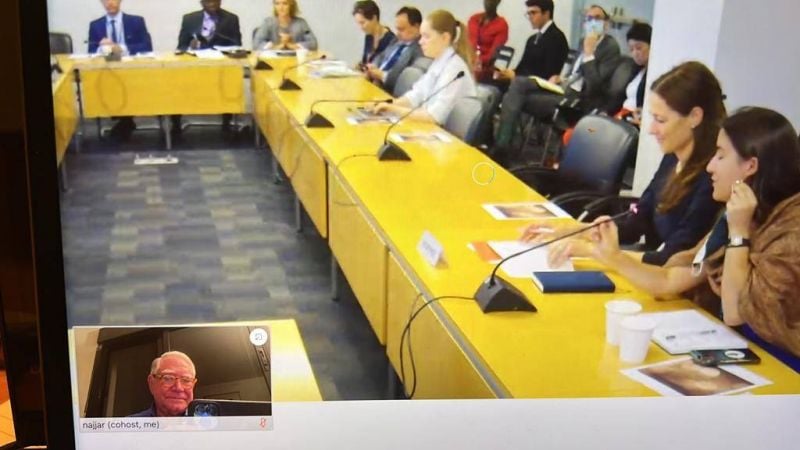
Lors de l’intervention à l’ONU d’Ibrahim Najjar, en visioconférence. Photo DR
La 20e Journée mondiale contre la peine de mort sera célébrée lundi 10 octobre par les abolitionnistes du monde entier. Elle est consacrée cette année aux liens entre le recours à la peine capitale et la torture, aux traitements cruels, inhumains et dégradants que subit le condamné à mort pendant son long parcours. Le Liban continue de prononcer la peine de mort. Il fait toutefois partie de ces abolitionnistes de facto qui ne pratiquent plus d’exécutions. La dernière mise à mort remonte à l’année 2004. Et le 16 décembre 2020, pour la première fois de son histoire, le Liban se prononçait pour un moratoire aux côtés de 122 autres États, lors de l’assemblée plénière des Nations unies sur la peine de mort. Le 17 septembre dernier, l’Assemblée générale des Nations unies revenait une nouvelle fois sur la question, évoquant les bonnes pratiques des États membres et les voies vers le moratoire. L’occasion pour l’ancien ministre de la Justice Ibrahim Najjar, également vice-président de la Commission internationale contre la peine de mort (CIPD), d’expliquer la décision libanaise par visioconférence, de faire le rapprochement entre le vote pour un moratoire et l’abolition de fait et de proposer le moratoire comme alternative aux pays islamiques qui ne peuvent aller vers l’abolition de manière expresse.
« Le Moyen-Orient est une région très difficile, où la religion, le terrorisme, les tensions intra-islamiques, la survie problématique des minorités sont un danger pour la paix et la liberté. L’abolition de la peine de mort n’est pas toujours compatible avec l’islam ou les considérations religieuses. C’est pourquoi voter pour un moratoire peut contribuer à consacrer une abolition de fait », souligne Ibrahim Najjar. L’abolitionniste reconnaît que dans la région, la peine capitale reste un problème, et que faire campagne contre elle n’est pas facile. « À première vue, il semble que la dignité de la personne humaine signifie très peu là où la dictature et l’absence de démocratie sont l’outil majeur pour garder le pouvoir ou gouverner le pays, constate l’ancien ministre de la Justice. Le nombre d’exécutions capitales n’est pas toujours publié. Mais selon les organisations de défense des droits de l’homme, en Iran, en Arabie saoudite, en Égypte, en Syrie et dans d’autres États arabes, c’est spectaculaire. La peine capitale est entendue parfois comme un moyen d’ordre public contre le terrorisme, ou pour éradiquer les trafiquants de drogue ou l’homosexualité ! »
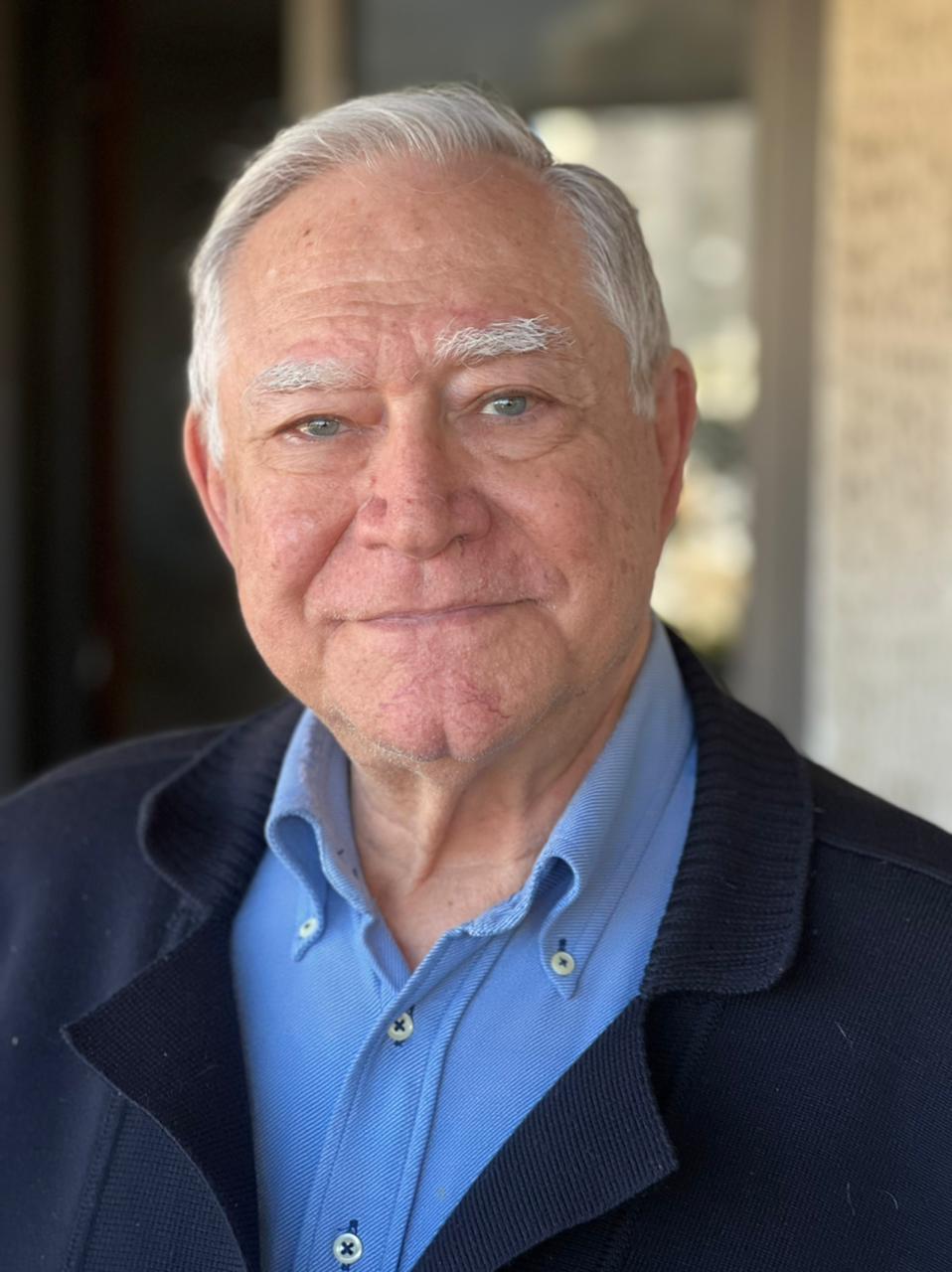 L’ancien ministre de la Justice Ibrahim Najjar, vice-président de la Commission internationale contre la peine de mort. Photo DR
Abolition et démocratie inséparables
Ibrahim Najjar estime qu’on ne peut séparer les progrès de la liberté et de la démocratie de l’abolition progressive de la peine de mort. La Palestine, la Malaisie, la Turquie et d’autres pays islamiques ont bien aboli la peine de mort. Et certains États arabes semblent déjà comprendre les avantages solides de l’abolition, comme le Qatar, la Jordanie, les Émirats arabes unis, Bahreïn…
C’est sur ces progrès que travaille la CIPD, révèle M. Najjar, qui rappelle les missions réussies au Liban des abolitionnistes Federico Mayor et Robert Badinter et celle qu’il a menée lui-même au Qatar en compagnie de Bill Richardson. « Le Liban est un point focal et une cible stratégique des troubles du Moyen-Orient. C’est un État laïc, mais les différences religieuses sont toujours importantes. Voter pour un moratoire sur la peine de mort est un moyen indirect de préserver l’abolition de fait », souligne l’ancien ministre.En 2008, la première décision d’Ibrahim Najjar comme ministre a été de refuser de contresigner l’ordre d’exécution de 19 condamnations à mort. « J’ai pensé qu’un tel refus devait être l’occasion d’établir un projet de loi pour abolir la peine de mort », note-t-il. « En conseil des ministres, j’ai clairement indiqué aux représentants du Hezbollah que je ne signerais aucun ordre similaire. Même si certains présidents et Premiers ministres n’étaient pas d’accord avec ma décision, celle-ci a été bien accueillie par mes successeurs, les barreaux et les dirigeants importants. De ce fait, le Liban n’a plus exécuté personne depuis 2004 », explique-t-il. Malgré les contingences religieuses et une certaine opposition islamique, le Liban a « indirectement aboli de facto la peine de mort, alors que le code pénal la mentionne encore formellement et que plusieurs jugements libanais doivent l’appliquer formellement ».


UNGA September 22, 2022
On death penalty – The United Nation General Assembly – 22
September 17, 2022
Abstract : In the Middle East we have an accumulation of problematic situations. Secularism doesn’t exist nor prevail in the Arab Islamic states. Democracy and freedom of speech are a very contingent issue. Death penalty was implemented as a mean to maintain dictatorships or to exercise the political power. In some states, it is used against the drug dealers, and to try to eradicate the homosexuality. Slavery, trafficking, terrorism, Islamism are perpetuated in many Arab states. More importantly, the direct abolition of the death penalty and the modification of penal codes seem very unlikely, as the death penalty in Islam is a matter of faith and religion. The judges have therefore to abide by the law, as they cannot - and have no capacity to - avoid its application. That’s why one can find that a de facto abolition of the capital punishment or a moratorium may be welcomed.
The Middle East is a very difficult region, where religion, terrorism, intra Islamic tensions, problematic survival for the minorities were and are always a danger for peace and freedom.
The abolition of the death penalty is not always compatible with
Islam or religious consideration. That’s why voting for a moratorium may help
consecrating a de facto abolition.
The capital punishment remains a problem in the Middle and Near
East. And the campaign against it is not easy. As a first look, it seems that
the eminent dignity of the human person means very little where the
dictatorship and the lack of democracy are the major tool to keep the power or
to rule the country. The number of capital executions is not always published.
But we now, according to the human rights organizations that in Iran, Saudi
Arabia, Egypt, Syria and other Arab states is spectacular. The capital
punishment is meant sometimes as a mean of public order against terrorism, or
to eradicate drug dealers or homosexuality!
One cannot separate progress of freedom and democracy and the
progressive abolition of the death penalty. This is why one should point out
that capital punishment is not incompatible with Islam – Palestine, Malaysia,
Turkey, and other Islamic have abolished the death penalty. And some Arab
states would be willing to understand the sound advantages of abolition: Qatar,
Jordan, United Arab Emirates, Bahrein…
That’s what ICDP is working on, thanks to brilliant and experienced
commissioners. Missions to Lebanon were led by Mr. Federico Mayor in 2014, followed
by a visit by Mr. Robert Badinter. Another mission to Qatar by Bill Richardson
and myself was successful; talks with representatives of The United Arab
Emirates, attempts to liaise with Iranian diplomats, alerts and publications
are constantly released about imminent executions in Saudi Arabia, Egypt and
Iran.
Lebanon is a focal
point and a strategic target in the middle eastern turmoil’s. It is a
secular state, but religious differences are still important. Voting for a
moratorium of the death penalty is an indirect way to preserve the de fact
abolition.
I was not an activist in the fields of Human Rights. But in 2008,
when I arrived to my office as Minister of Justice, my first decision was to
refuse to countersign the order for execution of a long list of 19 death
penalties that was immediately submitted to me. I felt that such a refusal must
be the opportunity to set a draft law for abolishing the capital punishment. In
council of ministers I made it clear to representatives of Hizballah that I’ll
not sign any similar order. Although some prominent presidents and prime ministers
did not agree with my decision, it was welcomed by my successors, law societies
and important leaders. As a result, Lebanon has no more executed any one since
2004. And despite the religious contingencies and some Islamic opposition to
the principle of its abolition, Lebanon has indirectly abolished de facto the
death penalty, while the penal code still mentions it formally and therefore
several Lebanese judgements have to formally apply it. The judge is not a
legislator.
The agreement between Lebanon and the Secretary General of the U.N.
for setting the Special Tribunal for Lebanon in 2007, related to the
assassination of Prime Minister Hariri and his companions has stated formally
that the death penalty will not be ordered.
In 2011, a law modifying the law on reduction of the criminal
penalties has been applied to the death penalty.
Two years ago, after years of voting against the moratorium in the
General Assembly of the UN, Lebanon has voted with it. It happened, I should
say, thanks to a decision taken by the Minister of Foreign affairs, but without
any formal opposition, even by those who promote the capital punishment for the
so called “intelligence with the enemy, Israel”. I assume that Lebanon will
keep voting with the moratorium for the years to come.
Lately, the minister of interior has submitted a draft law on the
reduction of the “jail year”, even in the case of capital punishment.
Not to mention a kind of consensus in order to adopt a legislation
giving the amnesty for many Islamic “terrorists”.
I hope that the Lebanon vote with the moratorium will be
confirmed!
#UNGA77
High-level side event on:
PATHWAYS TO MORATORIUM ON THE USE OF DEATH PENALTY:
EFFECTIVE AND GOOD PRACTICES FROM MEMBER STATES
co-sponsored by
Italy, Sierra Leone, OHCHR, Amnesty International and the European Union
Date: 22 September 2022 from 11:30 a.m. to 1:00 p.m.
Venue: Delegation of the European Union, 666 Third Ave., 31st Floor, New York,
(hybrid format)
PROGRAM
Welcoming Remarks:
H.E. Marina Sereni, Deputy Minister of Foreign Affairs and International Cooperation, Italy
H.E. David J. Francis, Minister of Foreign Affairs and International Relations, Sierra Leone
H.E. Eamon Gilmore, EU Special Representative for Human Rights
Keynote Speech:
Ms. Nada Al Nashif, Acting UN High Commissioner for Human Rights
Remarks of the Co-chairs of the Inter-Regional Task Force on the Moratorium on Death Penalty
H.E. Penny Wong, Minister for Foreign Affairs, Australia
H.E. Christian Guillermet-Fernandez, Deputy Minister of Multilateral Affairs, Costa Rica
Panel Discussion: Experience Sharing and Supporting Processes
H.E. Luise Amtsberg, Federal Government Commissioner for Human Rights Policy and Humanitarian Assistance, Germany
H.E. Ibrahim Najjar, Vice President of the International Commission on Death Penalty (ICDP)
Mr. Dobby Chew, Director of the Anti-Death Penalty Asia Network (ADPAN)
Representative of Ensemble Contre la Peine de Mort (ECPM)
Q&A (interventions from the floor)
Closing Remarks:
Ms. Agnès Callamard, Secretary General of Amnesty International
Moderator:
Mr Rio Hada, Head of Equality, Rule of Law and Development, UNOHCHR New York
Avec la journaliste Mme Raghida Dergham

Pour visionner la vidéo sur You Tube:
https://youtu.be/Pwj6Px87Log


Pour visionner la vidéo:
https://youtu.be/i08yDkYUJA0


Pour visionner la vidée sur You Tube
https://youtu.be/EEgS3AjX3FI


Pour visionner la vidéo de la rencontre:
https://youtu.be/i0tN9IPjLMQ
.JPG)

Rencontre à la Fondation Najjar Culture et libertés, le 18 mars 2022, avec l'ancien président Michel Sleiman

Rencontre du 4 mars 2022 à la Fondation Culture et libertés


Pour voir la vidéo:
https://youtu.be/iAGuPvn8m-g


Une rencontre réussie, pour redonner espoir au Liban


Pour visionner la vidéo de la rencontre

